


Most NDIS providers grow through word of mouth, and that is a good thing. But word of mouth now almost always passes through a website. A support coordinator hears your name at a meeting, a family member gets a recommendation from a friend, a plan manager searches for a provider in a particular suburb. Each of them opens a browser and decides, in a minute or two, whether you look like a safe choice.
Your website is the one marketing asset that works at 9pm on a Sunday, when a carer finally has time to research options. This guide explains how to set it up so it earns referrals instead of just existing.
Who is checking you out
Before you change anything, get clear on who your visitors are. In the NDIS, they usually fall into three groups, and each wants something slightly different.
Support coordinators
Need to know quickly if you have capacity, cover their client’s area and can start soon.
Plan managers
Look for clear pricing information, professionalism and easy ways to work together.
Participants and families
Want to feel welcome, understood and confident you will treat them with respect.
A site that tries to speak to everyone in general terms usually persuades no one. Aim to answer each group’s top questions within a click or two of your home page.
Say what you do, clearly
Most frequently found issue with services providers’ websites is the usage of vague expressions. For example, a phrase “quality person-centred supports” does not inform a visitor anything that he/she could not find on dozens of other websites. Therefore, it is better to talk directly about the following:
- What supports you provide (and what supports you don’t provide)
- Where your services are available, such areas, regions or travel distances
- Who your clients are, such as age or types of disability
- If there is availability at the moment
- How a new client can start receiving your help
Give each major service its own page with a descriptive title. This helps visitors, and it helps search engines understand what you do. If you are not sure how many pages you need, our web design services page explains how we structure provider sites.
Keep your wording accurate. Do not imply approval, endorsement or affiliation with the NDIA or the NDIS Commission unless it is true. Describe your registration status exactly as it appears on the NDIS Quality and Safeguards Commission register.
Show proof of trust
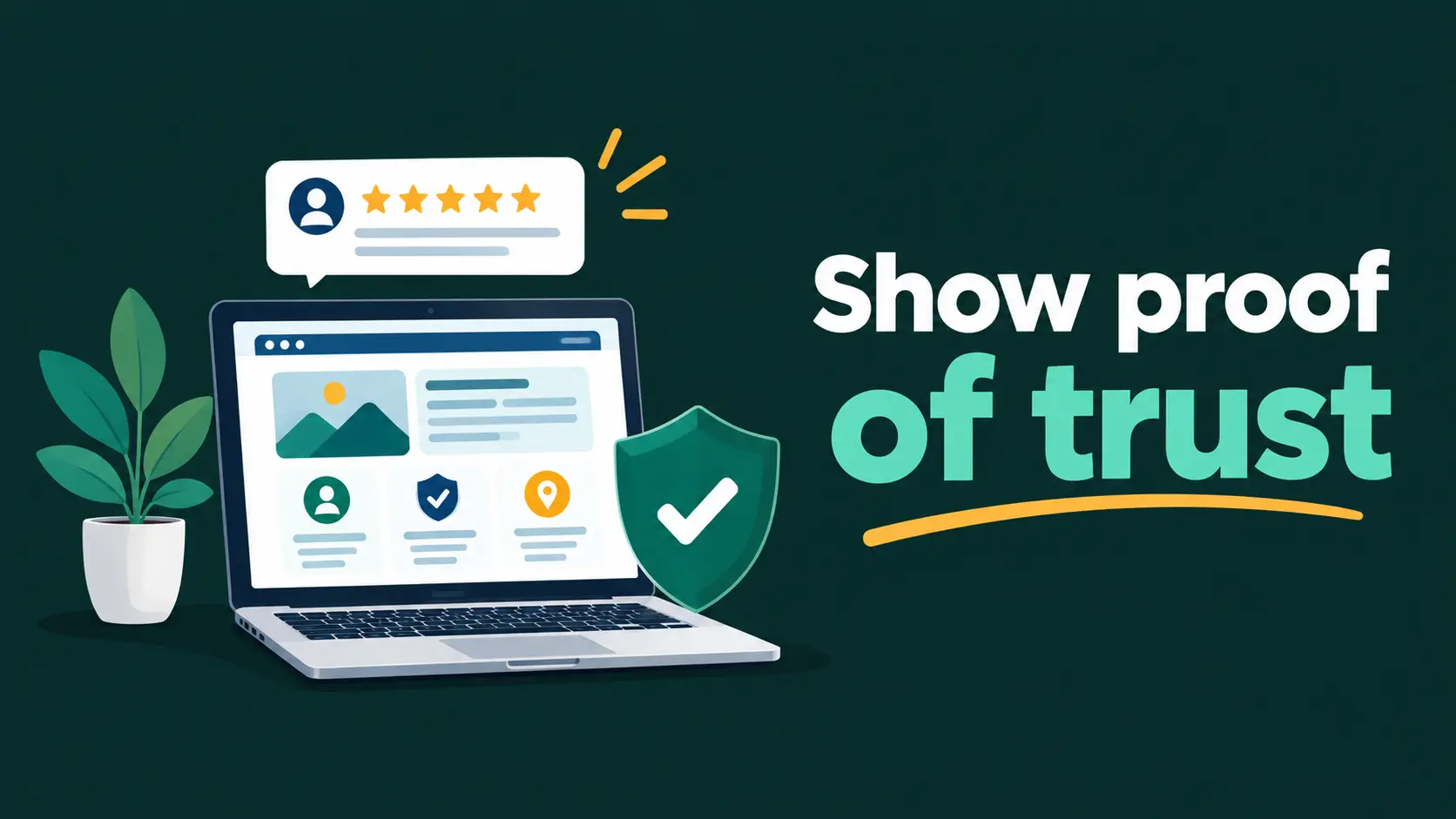
Making a choice about a provider is a significant thing to do, and it is normal for those responsible for the choice to be extremely careful. Your website should reduce their risks. Some ways to show them that you are trustworthy are:
- Registration and compliance details, including your registration status and screening practices
- The pictures of your staff members if you have their consent.
- Your testimonials with permission.
- Clear policies, like how you handle feedback and complaints
- Your explanation of how your services work.
The accessibility of your website is a sign of trust, too. A website that can be used by a screen reader, a keyboard user or someone who needs simple language shows that you understand your community. The W3C’s Web Accessibility Initiative is a good place to start, and we cover the practical steps in Accessible by Design: Web Insights for NDIS Providers.
Make referring easy
Here is the place where most websites fail to get referrals. A busy referral coordinator does not want to search for a phone number or fill out a long contact form. Make sure that as much hindrance as possible is removed from the process.
Add a dedicated referral page
Create a separate page for referrals. This page must have a brief form with required information (name, organization, participant’s first name or initials, type and urgency of support required). Also, add a downloadable referral form for those who prefer to send referrals via email. Always indicate the time of the response, and ensure that you meet that timing.
Show contact details everywhere
Your phone number and email must be written in the header or footer of each page, and the phone number must be clickable on mobile devices. Provide different ways of contacting you because some people want to call and some prefer writing.
Keep forms short and accessible
Every additional question results in lost inquiries. Use easy to understand labels, make sure that error messages help, and provide confirmation message that explains what happens next. Do not ask for sensitive data of personal or health nature in a simple web form.
Get found locally

Most searches related to NDIS are local: “occupational therapist near me,” or “support coordination in a suburb.“ The following three steps can really make a difference.
- Claim your Google Business Profile. Fill in your services, service area and opening hours using Google’s Business Profile Help guide.
- Mention your locations in your content, naturally. A page called “Community access in Penrith” is more useful than a generic services page.
- Follow basic SEO hygiene: clear page titles, descriptive headings, fast loading and mobile-friendly design. Google’s SEO Starter Guide covers the essentials without jargon.
Encourage happy clients and referring people to leave reviews, and never give rewards or post reviews yourself. Honest feedback creates the trust, and you can learn a lot from their experiences.
Measure what works
You do not require a convoluted dashboard. Begin by monitoring a few statistics monthly: how many inquiries were made through your website, how many came from referral people, how many visits were preceded by people accessing other pages, and where they came from. Always ask each new inquiry how they heard about your institution and make a note of the response.
After a number of months, the trends will be clarified. For example, if the referrals page receives no visits, then it should be made easier to find. If a lot of visitors leave after looking at your services page, then consider rewriting the content of this page. Gradual small improvements will be more successful than a major redesign that occurs every few years.
Common mistakes that cost you referrals

After analyzing various websites of organizations that provide similar services, one can see that similar recurring issues arise from the providers’ websites. The good thing is that most of the issues are quick to be resolved.
Hiding the next step
If a website visitor has to scroll and guess how to contact you, they might simply not bother. Each page of the site should have a clear call to action, e.g. “Make a referral” or “Call us at 02 8003 7308.“
Relying on stock photos
Using generic pictures of smiling individuals does not do you any favors. Pictures of your team, your premises and your activities (with agreement obtained) are perceived to be more realistic. When stock photos are used, ensure that the ones you choose depict persons with disability in a dignified manner that reflects their active roles.
Writing for yourself, not the reader
Using internal jargon, abbreviations and long sentences isn’t convenient for families that are already experiencing stress. Having short sentences, headings and simple writing makes life easier for everyone involved, including support coordinators who skim from one appointment to another.
Leaving information out of date
Having outdated price lists or a closed intake with the message “still accepting participants” or a faulty contact form can do more harm than not having that particular web page in the first place. Remind yourself to check your important web pages every three months.
Ignoring page speed
Large images either take a long time to download or do not upload at all which may lead to the slow page speed, particularly on a mobile device. Use Google’s Page Speed Insights for your home page and fix the most significant issues it highlights.
Build relationships, then let your website back them up
A website merely complements relationships; it does not supplant them. Most referrals come from people that already have some idea about you, and you get the best results if your online presence complements your personal contact.
- Send a short introduction to local support coordinators, plan managers and allied health professionals. Link directly to your referral page so they can act straight away.
- Keep referrers informed about your availability. A quick email when you open or close intake saves them time and builds goodwill.
- Say thank you. Acknowledging a referral promptly, and with respect for the participant’s privacy, is the simplest way to earn more.
- Show up locally. Community events, provider networks and expos give people a face to attach to your website.
Whenever you handle personal information from a referral, follow your privacy obligations. The Office of the Australian Information Commissioner publishes plain-language guidance on the Australian Privacy Principles, and it is worth reading before you build or change any form.
Your referral-ready checklist
Your 30-day plan
If this feels like a lot, Take this at your own pace.
- Week 1: Audit. Do an audit of your current website as if you were a support connection. Ask yourself: can you find essential service information, locations, days and hours, and contact information, in under a minute? Wherever you experience hurdles, make note of those areas.
- Week 2: Fix the basics. Identify any outdated information so you can make updates; put contact information on every page of the website; optimize file sizes so the website is still running well on mobile devices.
- Week 3: Build the referral path. Create your referral page and downloadable form, then complete your Google Business Profile.
- Week 4: Spread the word!. Contact your referees through email with your new page, communicate with some of your past clients, and implement a simple tracking system for inquiries.
After 30 days, review what you learned and pick one improvement to tackle each month. Steady progress beats a big launch followed by silence.
Want a website that earns referrals?
Uniweb builds clear, accessible websites for NDIS providers. Book a website review and we will show you what to fix first.
Book a website reviewFrequently asked questions
Quick answers to the questions NDIS providers ask us most about marketing and websites.
